Why New Runners Get Knee Pain (And The 3 Mistakes That Make It Worse)
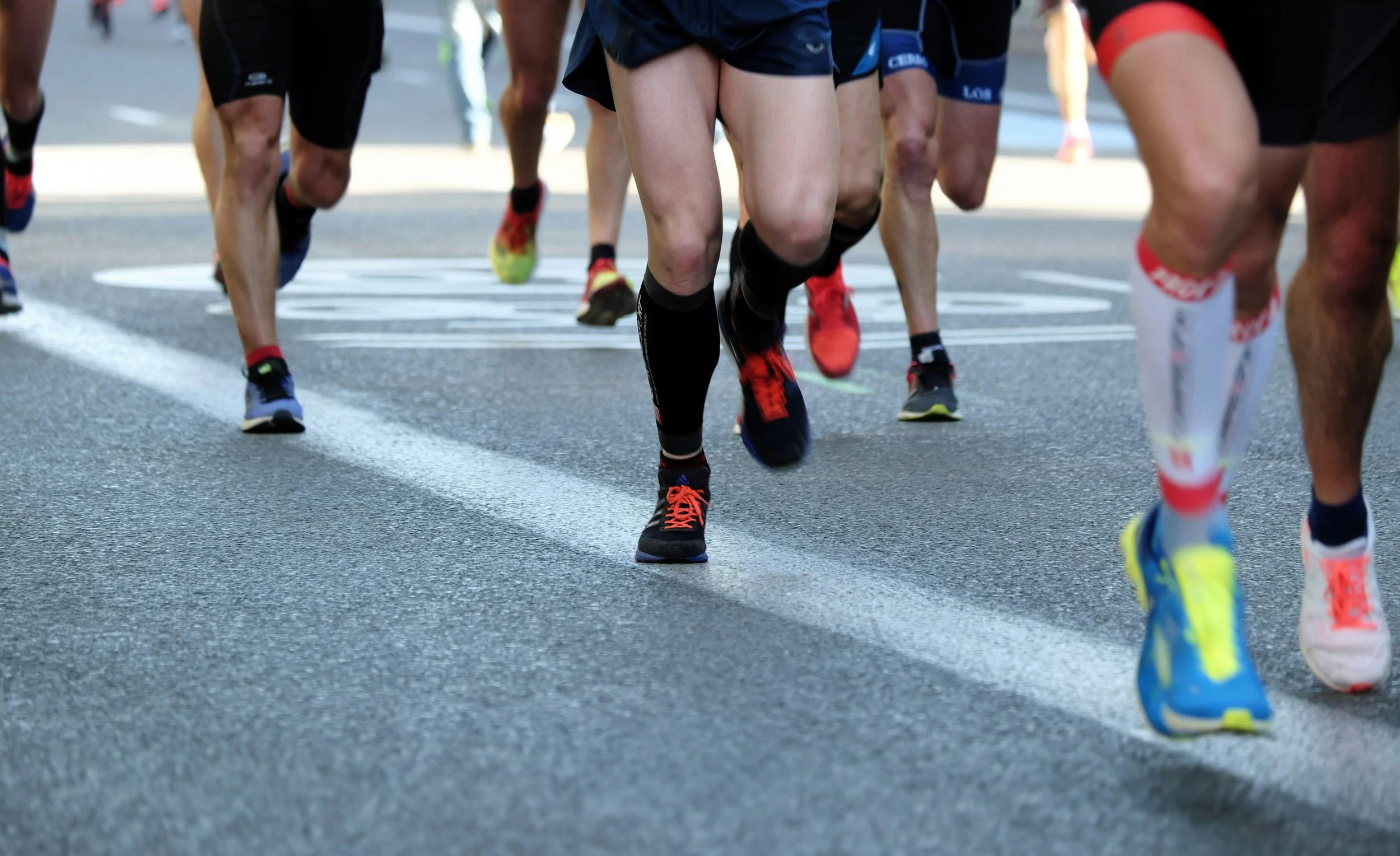
Every January and springtime we see the same pattern in physio clinics: people decide to start running. It’s accessible, requires very little equipment, and is a brilliant way to improve fitness and mental wellbeing.
But there’s one problem.
Many new runners develop knee pain within the first few weeks.
Often they assume something is “wrong with the knee”, when in reality the knee is simply the first place the body complains when running load increases too quickly.
The good news is that most running-related knee pain is very manageable once you understand what’s really driving it.
Here are three of the most common mistakes new runners make — and what actually helps.
Mistake 1: Ignoring Calf Strength
When people think about knee pain, they usually assume the problem must come from the knee itself.
In running, that’s rarely the case.
The calf muscles are actually one of the most important shock absorbers in the body when you run. With every step, the calf and Achilles tendon help absorb and recycle energy before it travels up the leg.
If the calf muscles don’t have enough strength or endurance, that load is transferred higher up the chain — often straight to the knee.
In clinic we often test this using a simple exercise: a single leg heel raise.
Most runners should be able to perform 20–25 controlled repetitions on one leg.
Many new runners with knee pain struggle to reach even 5.
This means the knee is doing far more work than it should be.
The solution isn’t complicated: progressive calf strengthening exercises can dramatically improve how the leg absorbs running forces.
Mistake 2: Progressing Running Too Quickly
Running injuries rarely come from a single event.
They almost always come from load increasing faster than the body can adapt.
One common scenario looks like this:
Someone decides to start running
They feel good after the first few runs
They quickly increase distance or intensity
Knee pain develops a week or two later
The challenge is that fitness improves faster than tissues adapt.
Muscles can adapt within a few weeks.
Tendons and joint cartilage take significantly longer.
For new runners, this means the body may feel ready to run further or faster, even though the joints and tendons are still adapting to the new load.
A simple strategy that works well is to stay at the same running level for two to three weeks before progressing.
This allows the body time to build tolerance safely.
Mistake 3: Overstriding When Running
Another common issue we see is running mechanics that place too much stress on the knees.
Many new runners tend to take long strides and land with their foot too far in front of their body.
This is known as overstriding, and it significantly increases the load passing through the knee joint.
A small change in running cadence can make a big difference.
Taking slightly shorter, quicker steps helps the foot land closer to underneath the body. This reduces the braking forces at the knee and spreads load more evenly through the ankle, calf and hip.
It’s a simple adjustment that can reduce knee stress immediately.
A Common Misconception: Stretching Alone Will Fix It
Many runners respond to knee pain by stretching more.
While stretching can be helpful if muscles are genuinely tight, it rarely solves the underlying issue.
In most cases the real problem is load tolerance — the body simply hasn’t built enough strength or capacity for the demands of running yet.
Strengthening exercises and sensible progression of running volume are usually far more effective.
The Good News
The majority of running-related knee pain is very manageable once the underlying drivers are addressed.
By improving calf strength, progressing running gradually, and making small adjustments to running mechanics, most runners can return to pain-free running surprisingly quickly.
If you’re experiencing knee pain when running, it doesn’t necessarily mean you need to stop altogether — but it may mean your body needs a more structured approach to building running capacity.
About Centre of Gravity Physiotherapy
At Centre of Gravity Physiotherapy we specialise in helping runners and active individuals return to pain-free movement through targeted assessment and personalised rehabilitation plans.
If running injuries are limiting your training, we can help identify the underlying cause and guide you safely back to the activities you enjoy.
Written By
Harry Liniker BSc MSc MCSP
Lead Physiotherapist and Founder, COG Physiotherapy Farnborough
