Understanding Common Causes of Low Back Pain

Low back pain is one of the most common reasons people seek physiotherapy. While it can feel worrying, most back pain is not caused by serious damage and often responds well to the right management.
Of course, there can be many different causes of low back pain, and no two people present in exactly the same way. The examples below focus on two of the most common patterns seen in clinic, rather than an exhaustive list of every possible diagnosis.
The Spine: Built for Strength and Movement
The spine is a strong and adaptable structure designed to support the body, protect the spinal cord, and allow movement. It is made up of individual vertebrae separated by discs, supported by joints, ligaments, and muscles.
Rather than being fragile, the spine is designed to tolerate load, movement, and day-to-day stresses. Problems tend to arise when tissues are overloaded, irritated, or not supported well — often influenced by activity levels, posture, strength, and recovery rather than a single structural issue.
Muscular Low Back Pain
What is it?
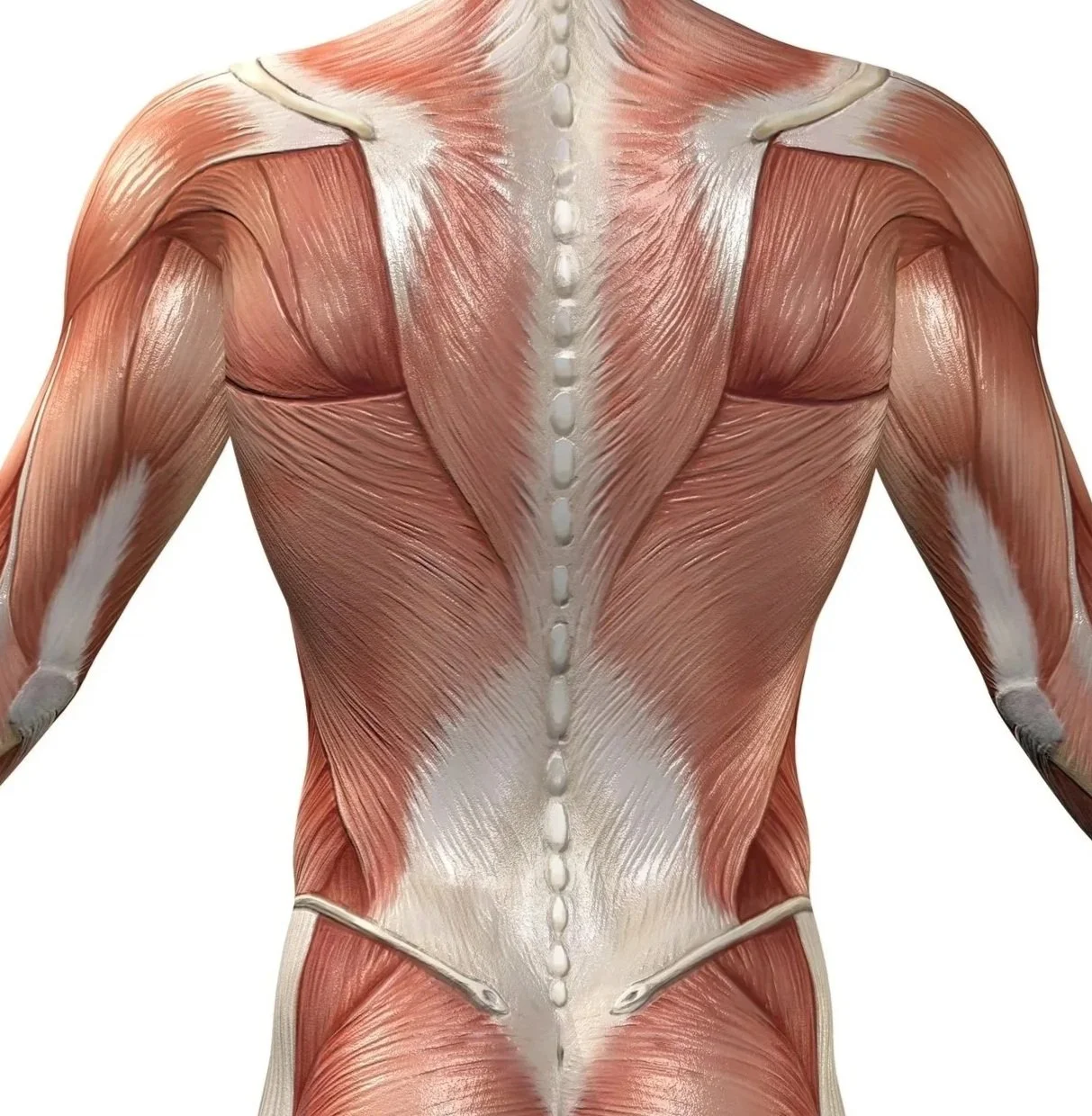
Muscular low back pain comes from the muscles, tendons, or ligaments around the lower back. It is very common and often linked to strain, overuse, or prolonged positions such as sitting.
Common symptoms
Aching or tightness in the lower back
Stiffness, particularly with movement
Pain that stays local to the back (not down the leg)
Discomfort with bending, lifting, or twisting
What helps?
In most cases, muscular low back pain improves with:
Staying gently active rather than resting completely
Modifying aggravating activities temporarily
Gradual return to movement and exercise
Improving strength and control around the trunk
Prolonged rest often slows recovery. Movement, when appropriately guided, is usually beneficial.
Facet Joint–Related (Facetogenic) Low Back Pain
What is it?
Facet joints are small joints at the back of the spine that guide movement and provide stability. Facet-related pain occurs when these joints become irritated, inflamed, or degenerate over time.
Common symptoms
Localised pain in the lower back
Pain worsened by twisting or arching backwards
Stiffness, especially after inactivity
Pain that may refer into the buttock or upper thigh
What helps?
Management often focuses on:
Physiotherapy-led exercise to improve strength, mobility and movement control
Reducing excessive load on the joints
Improving posture, stability and daily movement habits
In some cases, injections or other interventions may be considered alongside rehabilitation, but exercise-based management remains central to long-term improvement.
When Should You Seek Further Advice?
Because low back pain can have many different causes, assessment is important when symptoms persist or behave unexpectedly.
You should seek professional advice if:
Pain lasts longer than a few weeks
Symptoms are worsening rather than improving
Pain significantly limits daily activities
You experience symptoms such as numbness, weakness, or changes in bladder or bowel function
A proper assessment helps identify the most appropriate approach and rule out less common causes.
Key Takeaway
Low back pain can be frustrating and disruptive, but most cases respond well to a structured, individual approach that focuses on movement, strength, and long-term management rather than rest alone.
While muscular and facet-related pain are common, they are not the only possible causes. If you’re unsure what is driving your symptoms, a physiotherapy assessment can help clarify the cause and guide appropriate treatment.
References / Further Reading
NICE (2020).Low back pain and sciatica in over 16s: assessment and management (NG59).
Hartvigsen J et al. (2018).What low back pain is and why we need to pay attention. The Lancet, 391(10137), 2356–2367.
Steffens D et al. (2016).Prevention of low back pain. JAMA Internal Medicine, 176(2), 199–208.
Written By
Harry Liniker BSc MSc MCSP
Lead Physiotherapist and Founder, COG Physiotherapy Farnborough
